Rust Sulfur Heists and the Economy of Raiding
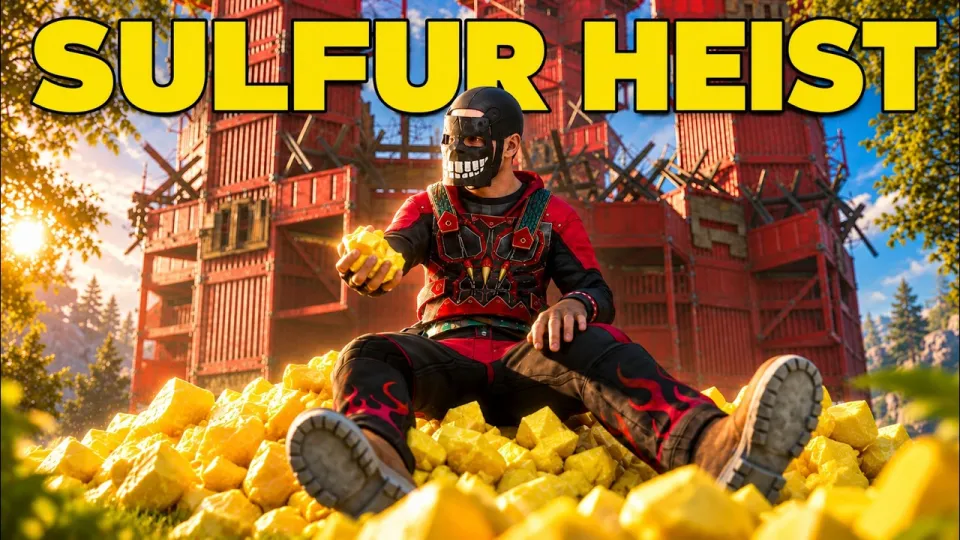
Video: We Stole Their ENTIRE SULFUR STASH - Rust
You can order the same kind of articles for your own video to boost it on YouTube and Google. Just message the Telegram bot @sat_sit_bot. It writes articles around your video, embeds the video and publishes them on popular niche websites (no ads). Your first 50 articles are free.
· based on the channel Schoolwe
Rust is a survival game where sulfur is the real currency: every rocket, C4 charge and satchel in the game is ultimately a pile of sulfur converted through gunpowder and explosives. A sulfur heist — the play Schoolwe builds his video around — means getting into an enemy base, emptying the boxes holding that sulfur, and leaving before the owners can respond, rather than grinding the whole base to dust. Sponsorship and community links for the channel live at HyperTune, and the rest of this article breaks down why that one resource decides wipes.
Why sulfur is the backbone of every Rust wipe
Sulfur is the raw material behind every explosive in Rust, so the group with the biggest stash controls the pace of the server. A single node of sulfur feeds the chain toward gunpowder, then toward explosives, rockets and C4; nothing that breaks a wall exists without it. That makes sulfur different from wood, stone or metal, which are bulky, renewable and replaceable within an hour of farming. A stack of sulfur is closer to ammunition than to a resource — it is potential damage waiting to be spent.
This is also why experienced players hide sulfur differently from everything else. It is small, it stacks, and it is the first thing a raider looks for after a breach, so a serious group splits it across several boxes and rooms rather than leaving one fat stack behind a single door.
How a sulfur stash heist actually plays out
A sulfur heist is a short, targeted raid with an exit plan, not a base wipe. The typical sequence looks like this:
- Scout the target: watch traffic, count players online, and note where the base's soft side is.
- Pick an entry that costs less than the loot — a wooden or sheet-metal wall, a window frame, a roof, or an unlocked garage door left by a careless owner.
- Bring the minimum: enough explosives or melee tools for the breach, plus bags, boxes and a fast way home.
- Empty every box, not just the obvious one — sulfur is often split, and the second room usually holds the rest.
- Leave immediately. The value of the play is the loot, not the kill count.
Schoolwe's video is built around exactly this logic: the group goes in for the stash, and the result is a raid count that outnumbers the fights. That imbalance is the point — a heist that turns into a firefight is a heist that has already gone wrong.
Reading the raid math before you commit
Every raid in Rust is a cost-benefit calculation, and sulfur heists only work when the expected loot beats the explosives spent. A rocket costs sulfur; a C4 costs more; a satchel is cheap but slow and unreliable against anything above sheet metal. If a wall costs two rockets and the room behind it might hold a few hundred sulfur, the raid is a loss even if it succeeds.
The heist format flips that math by attacking cheap walls and ignoring expensive ones. A wooden door, a soft-side wall or an unupgraded roof costs almost nothing to break, and the payoff — a stash that took hours of farming — can be ten or twenty times the investment. That is why raiders who understand the economy stop treating bases as fortresses to be demolished and start treating them as containers with one weak panel.
Defending your sulfur from a heist
If sulfur is the target, then sulfur storage is the most important design decision in a base. Practical measures that actually reduce the risk:
- Split the stash across at least three locations, including one outside the main base, such as a small stash base or a hidden box.
- Put sulfur behind a different material than the rest of the base — an armored core room surrounded by cheaper honeycomb forces raiders to spend more than the loot is worth.
- Never store sulfur next to your workbench, your loot room or your sleeping bags; those are the rooms raiders check first.
- Keep the stash base small and unremarkable. A giant compound advertises that something inside is worth stealing.
- Log off with sulfur in your inventory only if you accept losing it — boxes are safer than pockets in a counter-raid.
The common failure is convenience: players keep sulfur near the crafting area because that is where it gets used, and that single habit is what makes heists profitable.
What viewers keep asking about this style of Rust content
Community reaction to sulfur-heist videos tends to cluster around a few recurring themes. One is length — viewers who grew up on hour-plus Rust movies often say a shorter edit leaves them wanting more, which is a fair signal that the format rewards detail: the scouting, the farming, the decision to commit. Another is the base itself; a compact, well-planned starter design draws as many questions as the raid, and creators are frequently asked for a build guide.
A third theme is the crew. Rust is a social game, and audiences attach to groups rather than to individual players, so requests to bring back an old lineup appear under almost every video in the genre. Finally, there is the perennial question of which server a run happened on — official, community, or a private server with modified rates — since that single detail changes how impressive a stash actually is. None of these questions have a single answer, but they explain why heist videos keep working: the raid is the payoff, and the preparation is the story.
Useful links
- HyperTune — the sponsor link from the video.
- Schoolwe Discord — community, server talk and group finding.
- Schoolwe on Twitter — upload announcements and clips.
- Schoolwe on Twitch — live Rust gameplay.
The takeaway for your next wipe
Sulfur is the resource that decides who raids and who gets raided in Rust, and a stash heist is the cheapest way to flip that relationship in a single night. The formula is unglamorous: scout, breach something soft, take everything that burns, and leave before the owners log back in. Schoolwe's breakdown of a full stash steal is a useful reference precisely because it shows the preparation and the exit, not just the explosion. If you want to support the channel that produced it, start through HyperTune, then join the Discord to find a crew of your own. Store your sulfur in three places, and assume someone is already counting your walls.
Key takeaways
- Sulfur is the only resource that converts directly into raid damage: gunpowder, explosives, rockets and C4 all start at a sulfur node.
- A clan's sulfur stash is usually the single most valuable stack in a base — often worth more than the guns and armor stored beside it.
- Stealing a stash rather than blowing it up costs nothing in explosives and can end an entire wipe for the victim group.
- Most stashes sit in one obvious room, which is why a fast entry through a soft wall beats a long, loud door raid.
- Schoolwe's sulfur heist video is the reference point for the format: scout, breach, empty the boxes, leave before the counter-raid.
Source: We Stole Their ENTIRE SULFUR STASH - Rust · Markdown version
Questions & answers
What is a sulfur stash in Rust?
It is the accumulated sulfur a group keeps for crafting gunpowder, explosives, rockets and C4. Because every explosive in the game traces back to sulfur, a large stash represents hours of farming and is the most valuable single target inside most bases.
Is stealing sulfur better than wiping a base?
Usually yes, if the goal is profit. A full wipe costs a lot of explosives and time, while a targeted breach through a soft wall can reach the stash for a fraction of that cost. The trade-off is that the base survives and its owners can rebuild, so heists are repeated plays rather than a one-time kill.
How do I stop my sulfur from being stolen?
Split it across several boxes and at least two locations, keep it out of the loot room and crafting area, and put the main stash behind an armored core surrounded by cheaper honeycomb. A small, unremarkable stash base is safer than a large obvious one.
Why do Rust videos get shorter while viewers ask for longer ones?
Editing for retention pushes creators toward tight, fast-paced cuts, while a large part of the audience grew up on long-form Rust movies and wants the scouting, farming and downtime included. Both formats work, but they serve different viewers.